What DeepReco teaches you, concretely
Who do AI assistants really recommend? Our studies decode each category and turn those answers into concrete levers for your brand.

Our observatory mini-campaigns




Illustration of what DeepReco teaches you
Recommendation can be drastically different depending on the consumer profile.
Your overall score does not stay the same when the consumer expresses a specific need.
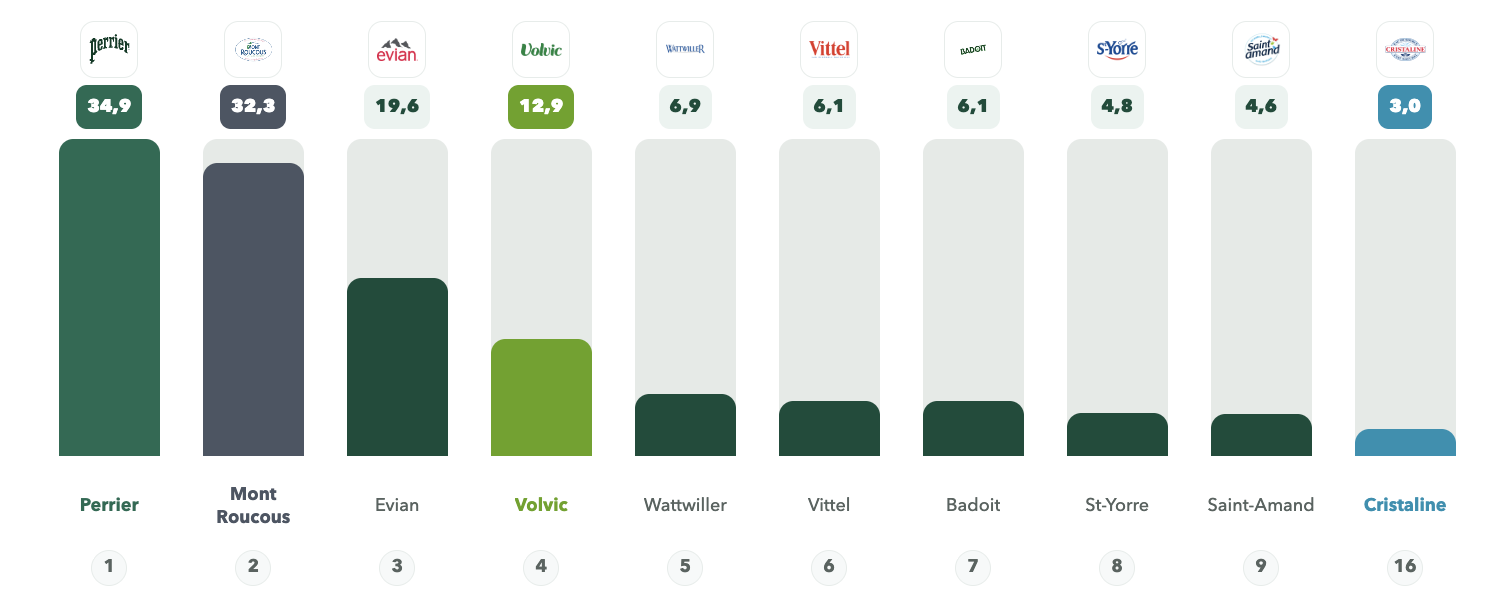
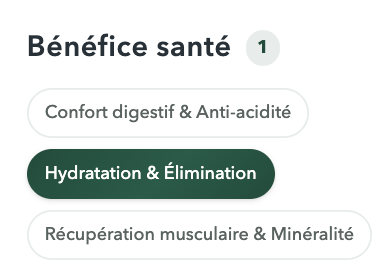
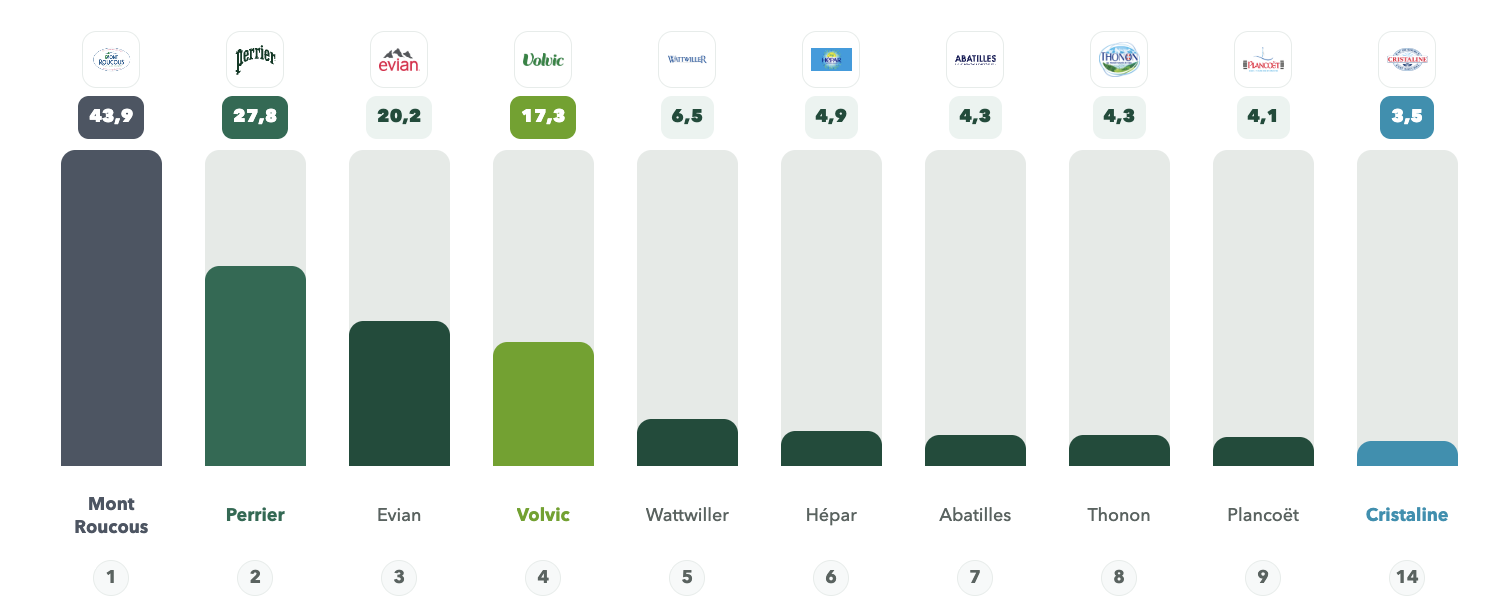
The recommendation score is built across all profiles: without a filter, Perrier ranks first (34.9) ahead of Mont Roucous (32.3). As soon as the Hydration & Elimination filter is applied, Mont Roucous moves to first (43.9) and Perrier drops to 27.8. The same score therefore shifts depending on the profile targeted.
- Your recommendation score, across all profiles.
- How it changes depending on the profile or need targeted.
- The profiles for which your score drops.
Spot the profiles for which your recommendation score drops, so you can strengthen your arguments where prescription is fragile rather than chase general visibility.
Brand websites account for only 35% of the content AI uses.
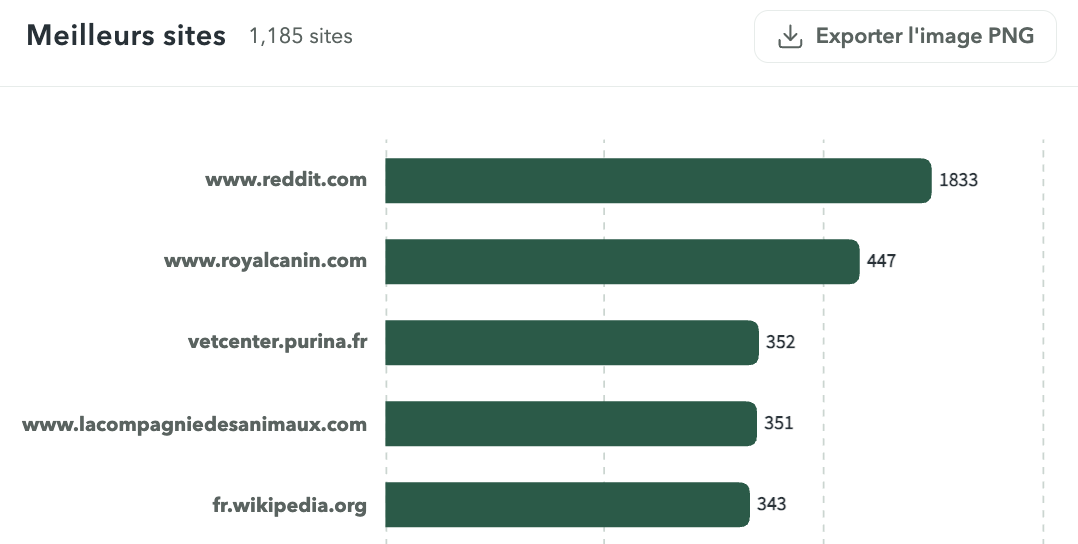
Sources outside your website feed AI answers in your category.
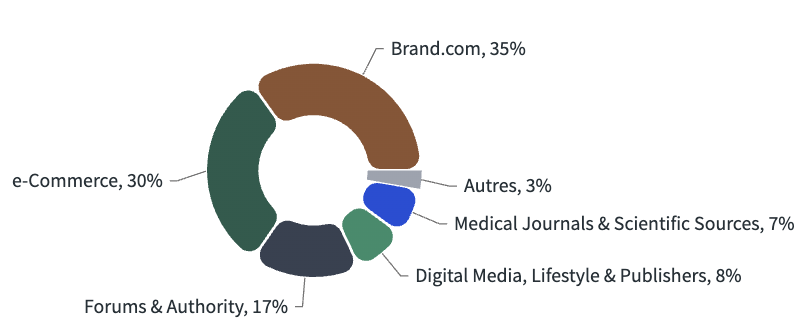
In our pet food campaign, brand websites account for only 35% of the sources cited. The remaining 65% come from e-commerce platforms (30%), forums and authority sites (17%), media (8%) and medical journals (7%).
- The share of your own websites among citations.
- The e-commerce platforms and forums that talk about your products.
- The authority sources to strengthen first.
Know which platforms and forums feed the answers, so you can strengthen your presence where recommendation actually forms, beyond your own website.
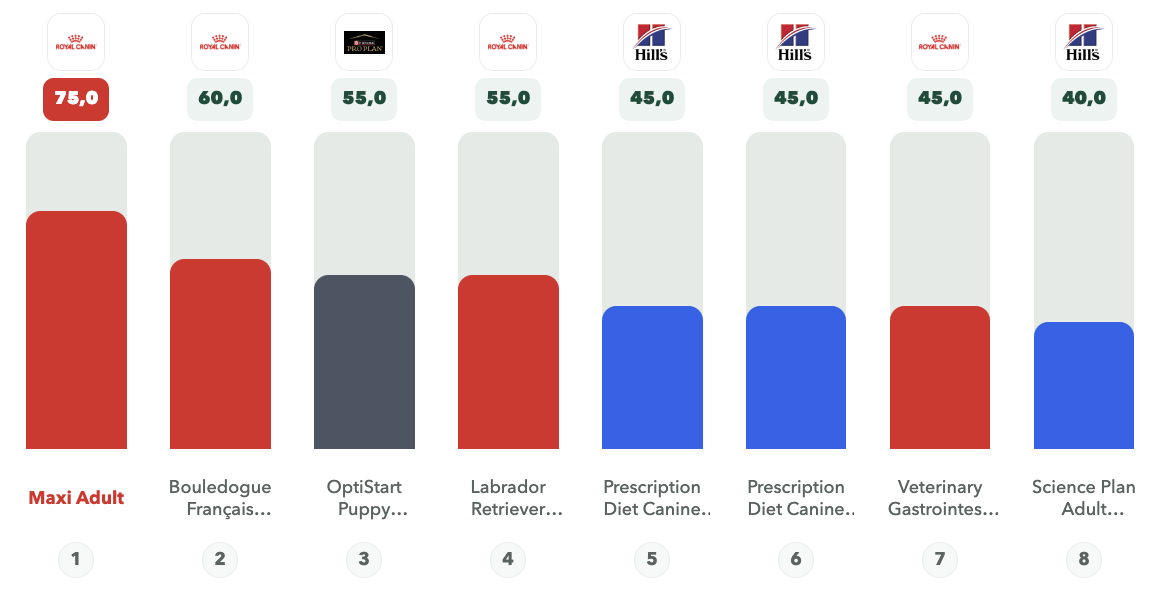
Perceived quality varies drastically from one product to another within the same brand.
A new product must be positioned on the right intentions to be recommended.
In our pet food campaign, Royal Canin Maxi Adult reaches a score of 75.0, while the Royal Canin Bouledogue Français stops at 60.0. A brand is not recommended uniformly. A prompt rich in criteria and intentions reveals the sources that shape these answers and gives a positioning intention, without placing the product on its own.
- Prompts rich in criteria and intentions, to target real expectations.
- The sources that surface for each intention.
- The intentions on which your product can take the lead.
Give your launch a clear intention: know which expectations the product can be recommended for, and which sources to feed before it goes live.
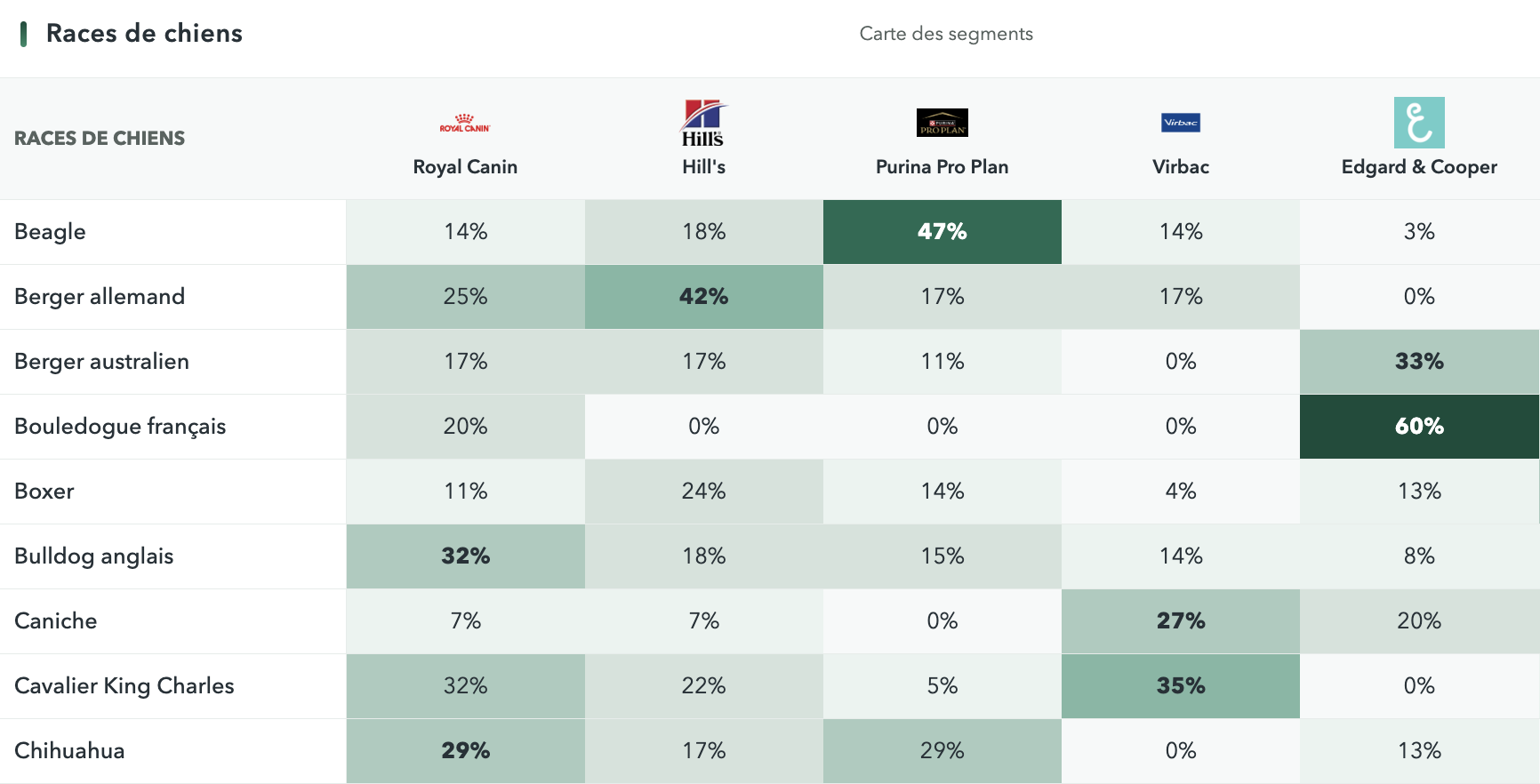
A brand can lead one segment and be absent from another.
Your competitors take the lead on some customer segments, where you fall behind.
In our pet food campaign, Edgard & Cooper reaches 60% of recommendations for the French Bulldog, while Hill’s and Purina Pro Plan sit at 0% on this segment. For the Beagle, Purina Pro Plan reaches 47%, against 14% for Royal Canin. A brand can be very well placed on one need and invisible on another.
- Your share of recommendations by segment, against each competitor.
- The segments where a brand is absent or behind.
- The brands that win on a specific segment.
Target the segments where you fall behind and those where a competitor is exposed, rather than defending a general image.
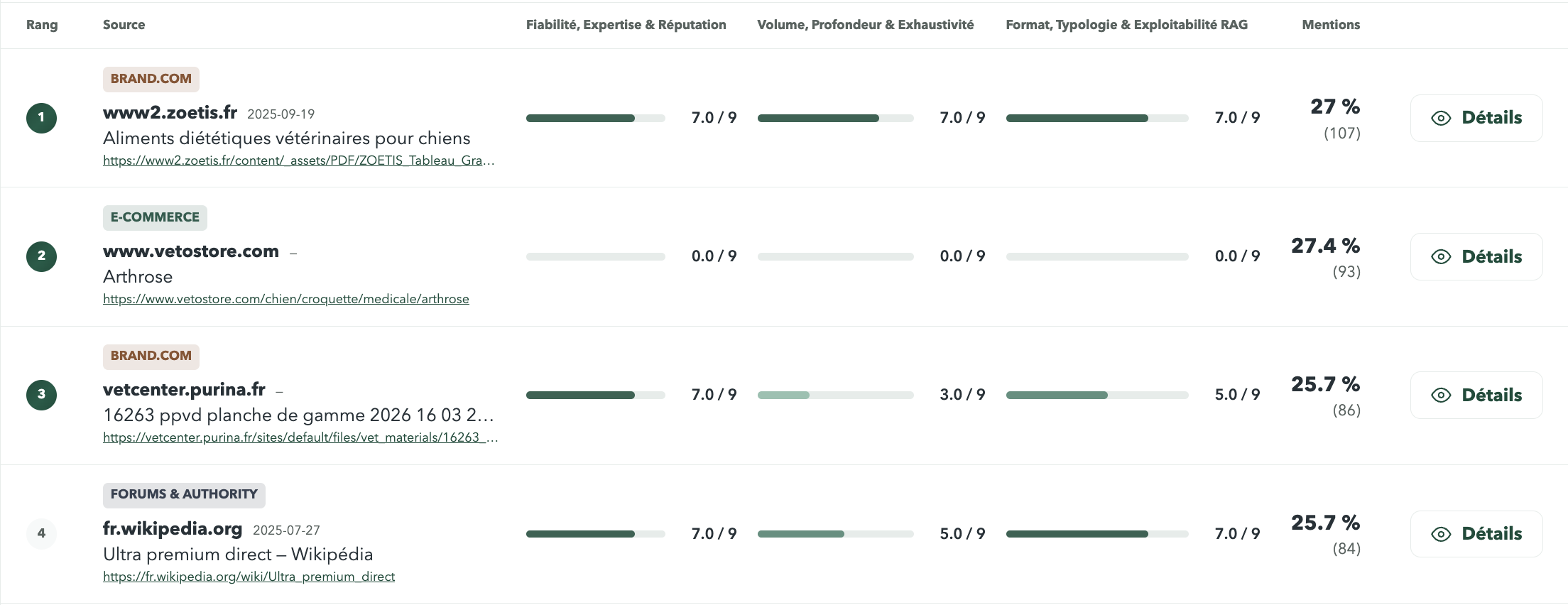
The most-used contents are not the ones you think.
A few contents weigh most in AI answers, and your presence on them really matters.
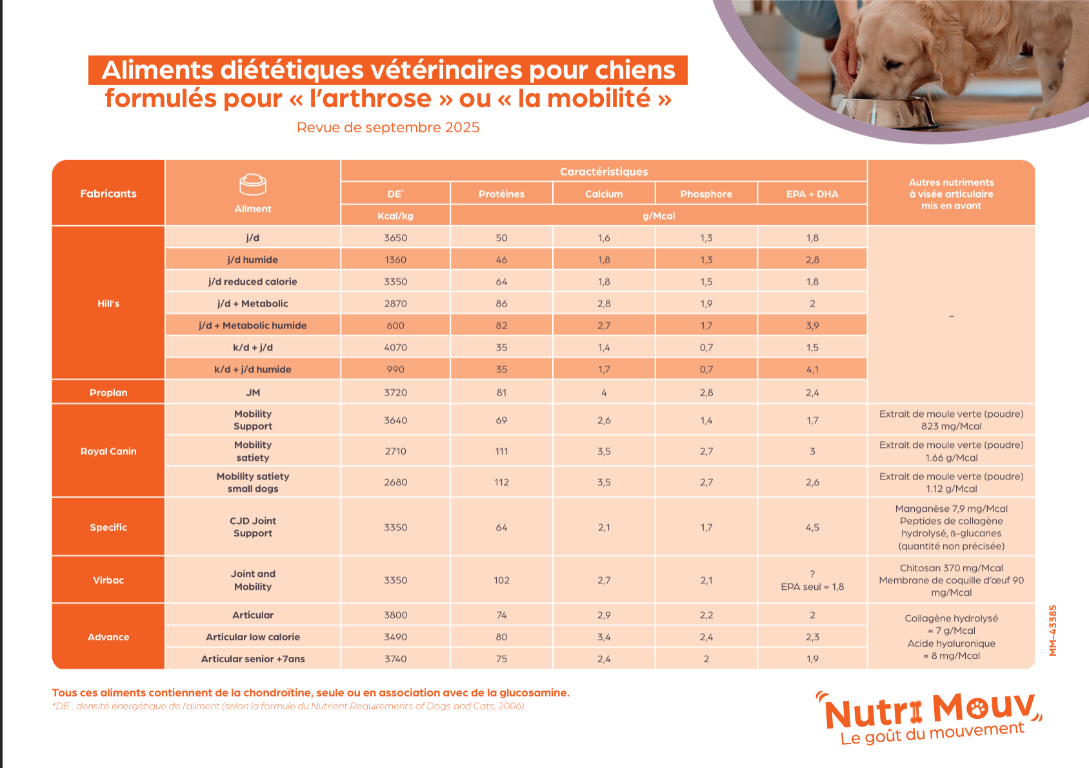
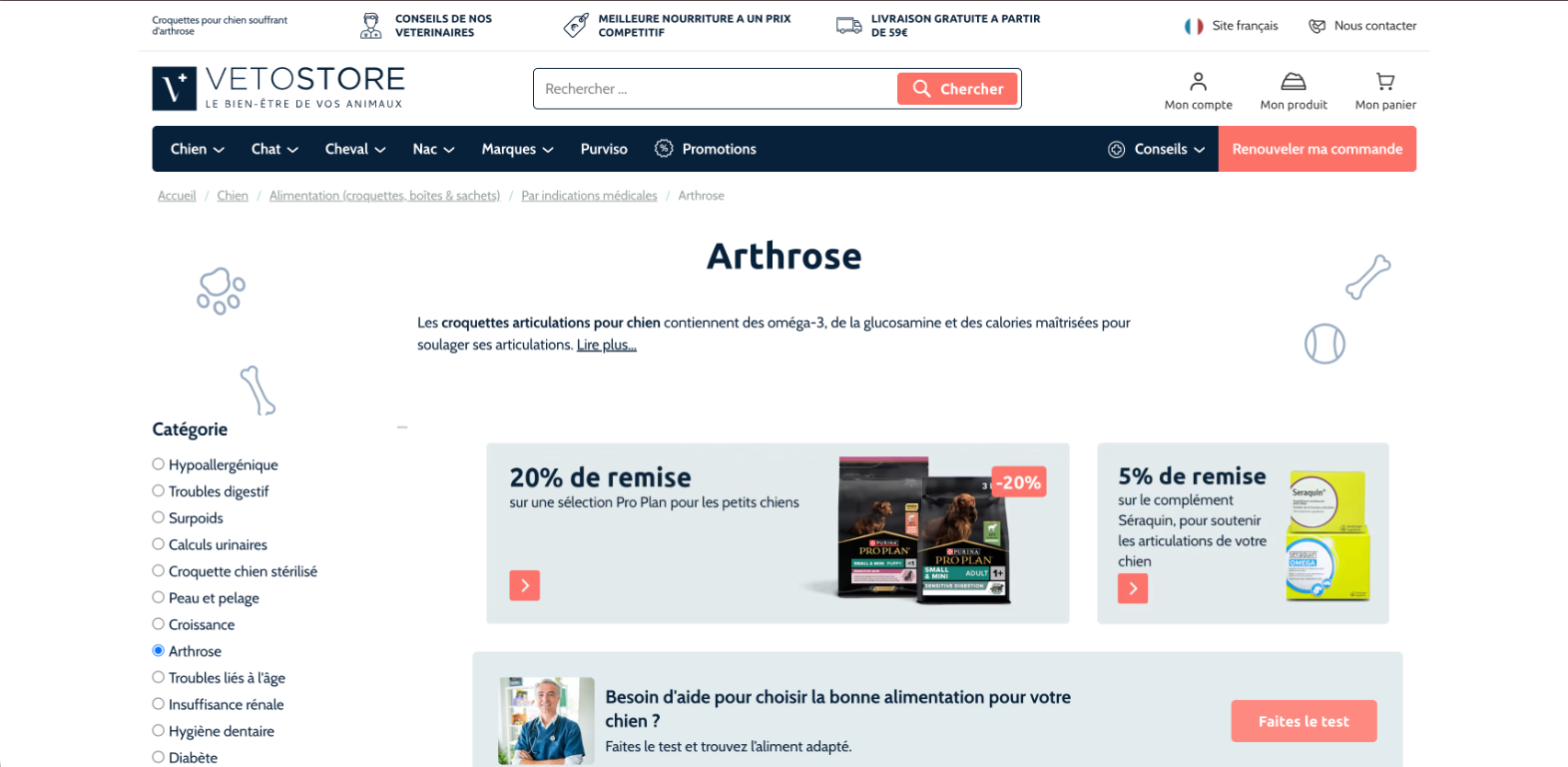
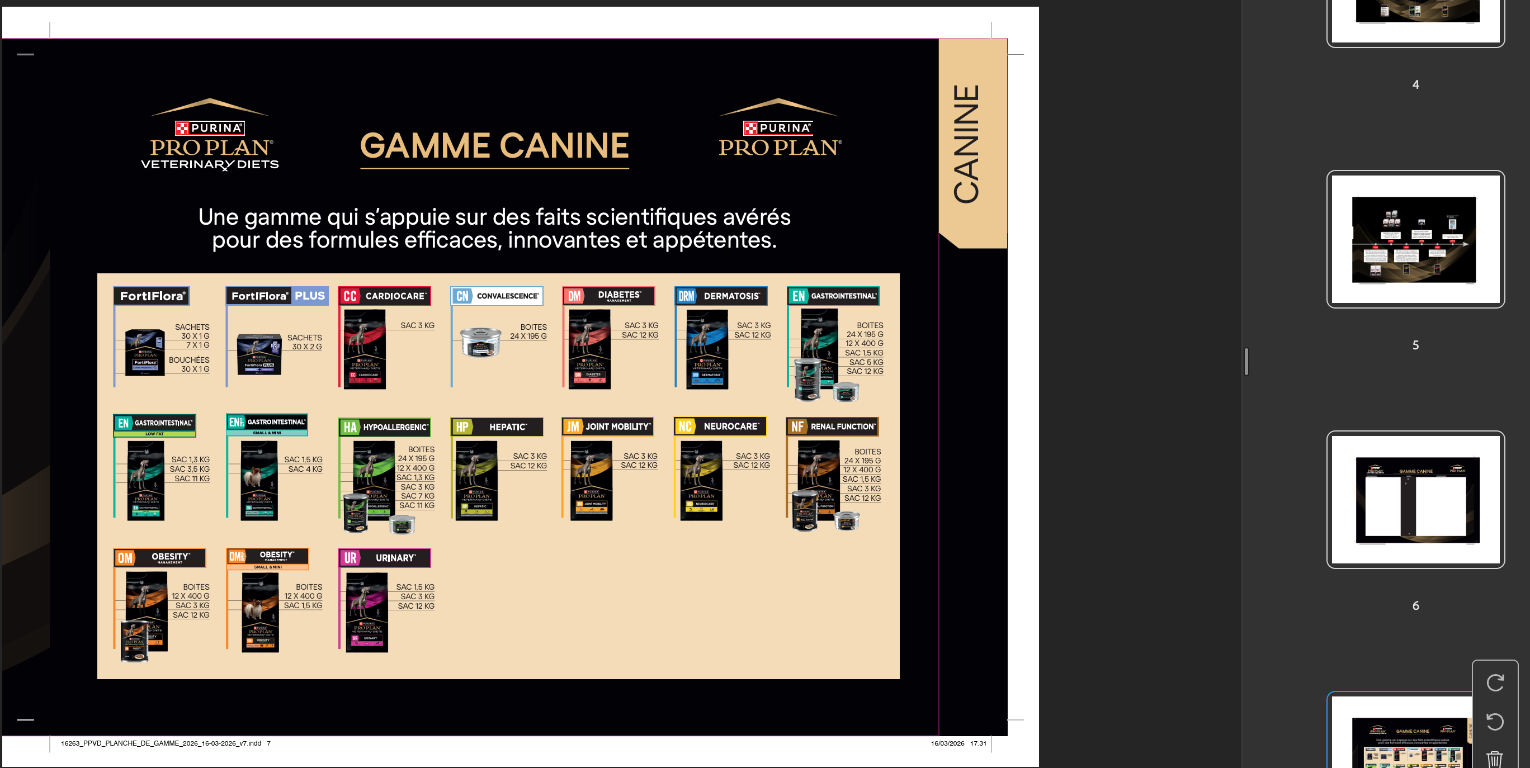
In our pet food campaign, three contents each account for around 25 to 27% of citations: a general comparison PDF, an e-commerce page dedicated to kibble for dogs with arthritis, and a PDF focused on Purina. The e-commerce page ranks first because it groups several brands on the same request: it influences the recommendation of each of them, including yours.
- The most cited contents, across all brands.
- The contents that compare several brands, and those focused on a single one.
- The weight of each content in AI answers.
Focus your presence on the few contents that really shape the answers, rather than spreading your efforts across secondary sources.